


Hello Project AI enthusiasts,
This week, we're navigating the increasingly complex intersection of AI, national security, and governance. From the Pentagon's unprecedented designation of Anthropic as a security risk to sophisticated jailbreaks targeting frontier models, the stakes for AI deployment have never been higher. We'll explore how these geopolitical tensions and security vulnerabilities are reshaping the landscape, not just for tech giants, but for how we manage and secure our own projects.
Geopolitical Tensions: The Pentagon's decision to label Anthropic a supply chain risk raises profound questions about who controls how frontier AI models are deployed in military operations. This clash between national security interests and responsible AI development will directly impact commercial AI deployment and the software supply chains we rely on.
Model Efficiency Revolution: The release of Nano Banana 2 marks a significant leap in model efficiency, demonstrating that highly capable AI can run on edge devices without relying on massive cloud infrastructure. This shift towards efficient, edge-capable models addresses major data privacy and security concerns for project teams.
Decentralised AI Movement: Jack Dorsey's latest venture is challenging the established AI hierarchy by focusing on decentralised, open-source development. This push introduces new variables into project tech stacks, requiring project managers to weigh the benefits of independence against the support and reliability of established enterprise solutions.
Enterprise AI Integration: Anthropic unveiled a wave of new Claude Cowork plugins covering HR, investment banking, engineering, design, and private equity workflows. This is the moment AI transitions from a standalone chatbot to an integrated team member within your existing tech stack.
Implementation Reality Check: In our latest guest blog, Nermeen explores the gritty reality of implementing AI in large-scale projects. Moving past the hype, she details the cultural resistance, data quality issues, and unexpected bottlenecks that teams face when deploying new tools.
In This Edition
Flux check-in
Anthropic vs The Pentagon: A $200 Million Standoff Over AI Ethics
The Pentagon's decision to label Anthropic a supply chain risk raises profound questions about who controls how frontier AI models are deployed in military operations. Defence officials demanded the right to use AI for all lawful purposes, while Anthropic held firm against granting broad permissions. Read the full breakdown →

What Does This Mean for Me?
For project delivery professionals, this clash highlights the growing importance of AI governance and compliance. As AI becomes integrated into critical infrastructure and sensitive projects, understanding the ethical boundaries and security implications of the tools we use is no longer optional—it's a core competency. The tension between commercial viability and responsible AI development will directly impact the software supply chains we rely on.
Key Themes:
• Tension between national security and AI ethics.
• Growing scrutiny of AI supply chains.
• Importance of robust AI governance frameworks.
• Impact on commercial AI deployment.
Down the Rabbit Hole:
Google's Nano Banana 2: 10x Faster, 4K Resolution, and Ready for Your Next Project
The release of Nano Banana 2 marks a significant leap in model efficiency, challenging the assumption that bigger is always better. This new architecture demonstrates that highly capable AI can run on edge devices without relying on massive cloud infrastructure. Read the full breakdown →

What Does This Mean for Me?
This shift towards efficient, edge-capable models means project teams will soon have access to powerful AI tools that operate entirely offline. This addresses major data privacy and security concerns, allowing for the deployment of AI in highly sensitive project environments where cloud connectivity is either impossible or prohibited.
Key Themes:
• Shift towards smaller, efficient models.
• Rise of edge computing in AI.
• Enhanced data privacy and security.
• Democratisation of AI capabilities.
Down the Rabbit Hole:
Morta — the controls and information platform for design and construction delivery.
Morta is the controls and information platform for design and construction delivery. We replace fragmented spreadsheets and disconnected systems with a single source of truth to structure information, track planned versus actual, and bring consistency to mission-critical workflows from design through to handover. Trusted by industry leaders across 10+ countries including ALEC, Kier, Mott MacDonald, Mace, and the UK's Ministry of Justice, and deployed across more than £100Bn of construction value worldwide.

Try Morta for free. Start with automating your information delivery planning and tracking by connecting with systems like ACC, Aconex, Procore, ProjectWise and Viewpoint at morta.io
Jack Dorsey's 4,000-Job Bombshell: Is Your Project Team Next?
Jack Dorsey's latest venture is challenging the established AI hierarchy by focusing on decentralised, open-source development. The firm aims to build tools that resist corporate monopolisation and put control back in the hands of developers and users. Read the full breakdown →

What Does This Mean for Me?
The push for decentralised AI introduces new variables into project tech stacks. While open-source tools offer greater flexibility and lower costs, they also require more rigorous internal governance and technical expertise to implement safely. Project managers must weigh the benefits of independence against the support and reliability of established enterprise solutions.
Key Themes:
• Rise of decentralised AI development.
• Challenge to corporate AI monopolies.
• Focus on open-source accessibility.
• Shift in developer ecosystems.
Down the Rabbit Hole:
Anthropic's New Agents: Is Your SaaS Stack About to Be Replaced?
Anthropic unveiled a wave of new Claude Cowork plugins covering HR, investment banking, engineering, design, and private equity workflows. New connectors to Google Workspace, DocuSign, and FactSet let Claude pull context directly from enterprise software. Read the full breakdown →

What Does This Mean for Me?
This is the moment AI transitions from a standalone chatbot to an integrated team member. For project delivery, the ability to connect AI directly to your existing tech stack—pulling data from your documents, schedules, and communications—eliminates the friction of context switching. It enables true automation of complex, multi-step workflows.
Key Themes:
• Integration of AI into enterprise software.
• Automation of complex workflows.
• Shift from chatbots to AI agents.
• Enhanced context awareness in AI.
Down the Rabbit Hole:
Gen Alpha, AI anxiety and a half-term kitchen table
In our latest guest blog, Nermeen Latif explores the gritty reality of implementing AI in large-scale projects. Moving past the hype, she details the cultural resistance, data quality issues, and unexpected bottlenecks that teams face when deploying new tools. Read the full breakdown →

What Does This Mean for Me?
Nermeen's insights are a crucial reality check for any project leader championing AI adoption. The technology is often the easiest part; the real challenge lies in change management, upskilling teams, and redesigning legacy processes to actually benefit from AI capabilities. Success requires a focus on people, not just platforms.
Key Themes:
• Challenges of real-world AI implementation.
• Importance of change management.
• Navigating cultural resistance to AI.
• Focusing on data quality and processes.
Down the Rabbit Hole:
The pulse check
Tip of the week
A Prompting Framework for Professionals: Four Modes Matched to Expertise and Task Type
Antony Slumbers introduces a practical prompting framework for professionals that maps two variables—domain expertise level and task type (Discovery vs Execution)—into four distinct prompting modes: A, B, C, and D. Each mode is optimised for different combinations of expertise and task requirements, allowing professionals to adapt their prompting strategy based on what they're trying to accomplish.
The framework recognises a critical insight from Anthropic's Economic Index Report: AI amplifies existing expertise rather than substituting for it. This means the difference in ROI between teams that prompt well and those that do not is enormous. Professionals with deep domain knowledge who learn to prompt effectively can leverage AI as a force multiplier, whilst those without strong prompting discipline may find AI tools less useful.
The framework includes an expert Mode Switching loop that alternates between divergent analysis (exploring possibilities broadly) and convergent drafting (narrowing down to actionable outputs). This iterative approach produces better work with fewer errors by combining the exploratory power of AI with human judgement and refinement.
For project professionals, mastering this framework means understanding when to ask exploratory questions versus when to request specific deliverables, and how to adjust your prompting strategy based on your own expertise level in a given domain.
Governance & Security
The past week has highlighted the escalating arms race in AI security and governance. OpenAI's introduction of Lockdown Mode in ChatGPT underscores the growing sophistication of adversarial AI attacks. Claude's vulnerability to jailbreaks that enabled a 150GB data heist targeting sensitive Mexican government data highlights the ongoing vulnerability of frontier AI models to adversarial manipulation.
The Pentagon's designation of Anthropic as a security risk further emphasises the need for robust, proactive security measures and clear governance frameworks for anyone deploying AI in sensitive environments.
Robotics
• Waymo expands to 10 US cities with 400,000 weekly rides: Waymo opened its robotaxi service to select riders in four new US cities, bringing its total to 10 markets. The company currently provides more than 400,000 weekly trips and is targeting 1 million weekly paid trips by the end of 2026.
• Tesla Cybercab rolls off assembly line ahead of April mass production: Tesla's Cybercab has rolled off the assembly line, ticking off a major milestone for the company. The fully autonomous vehicle has no steering wheel or pedals and runs entirely on Tesla's FSD system.
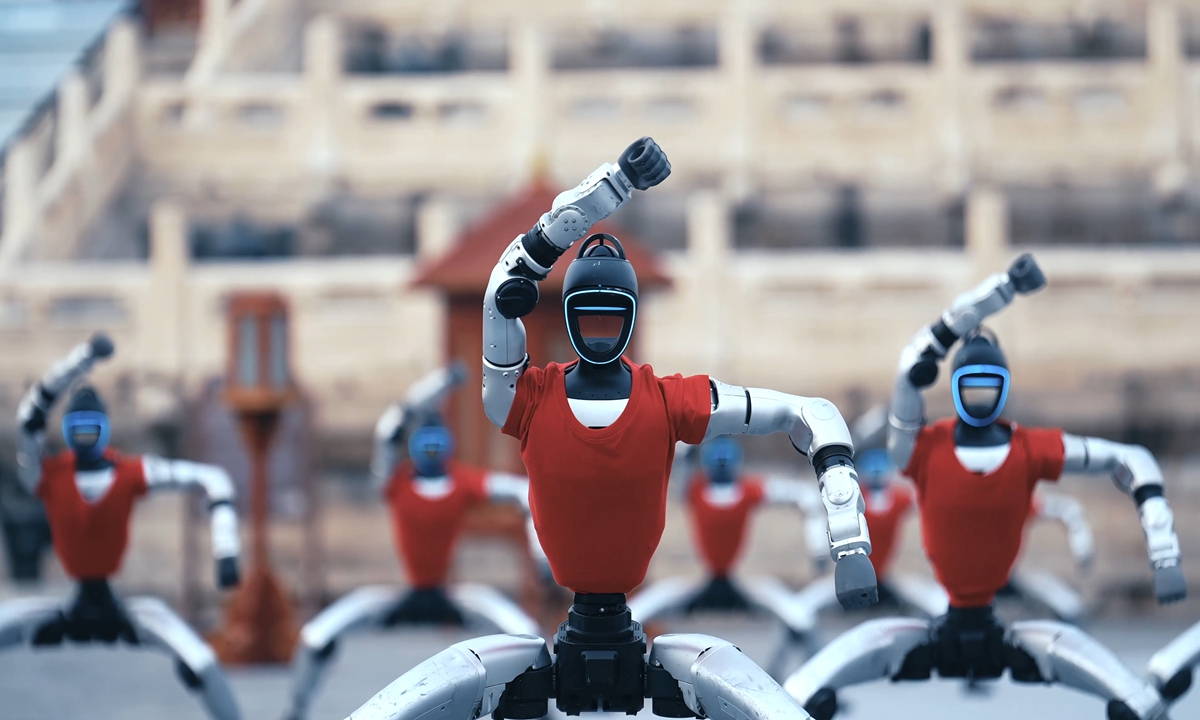
• Xiaomi deploys humanoid robots in EV factory: Xiaomi's humanoid robot successfully operated autonomously for 3 consecutive hours at a self-tapping nut assembly station in its EV factory, demonstrating practical real-world deployment capabilities.
• Why China's humanoid robot industry is winning the early market: China's push into humanoid robots is accelerating, with domestic firms shipping more units and iterating faster than U.S. competitors in a still-nascent market.
• Honor's Humanoid Robot Makes Its Debut With Bold Moves: Honor's move into robotics marks a significant entry into the humanoid robot market, with the debut showcasing impressive autonomous capabilities at MWC 2026.
Trending Tools and Model Updates
• Interpreter launches as a free desktop agent that manages documents offline: Interpreter is a new desktop app that works as an AI agent for everyday documents, filling PDF forms, editing Excel sheets with pivot tables and formulas, and writing Word docs with tracked changes and formatting.
• DeepMind releases Lyria 3 — text-to-music built into Gemini: Google DeepMind released Lyria 3, a music generation model built into Gemini that lets anyone generate a 30-second song, complete with lyrics and album art, from a simple text prompt or photo.
• Pika Labs launches AI Selves — living digital twins with persistent memory: Pika Labs unveiled AI Selves, a tool that lets users birth a living digital twin of themselves, one that talks, remembers things, and changes over time.
• Notion launches Custom Agents — autonomous AI teammates that work 24/7: Notion shipped Custom Agents, fully autonomous AI agents that users set up in plain language, assign a trigger or schedule, and let run 24/7 across Notion, Slack, Mail, Calendar, and Figma.
• Perplexity Computer — a 19-model AI agent that runs projects for months: Perplexity Computer is a new general-purpose digital worker that leverages 19 different AI models, routing each subtask to the best-suited model for complex projects.
• OpenSpace Field launches for construction teams: OpenSpace Field is an image-based solution for construction teams that captures and manages tasks in real time, integrating with Procore and Autodesk Construction Cloud.
• Hoppa | Your Data Refinery For Built Environment Workflows: Hoppa offers solutions for data challenges, emphasising the importance of data governance, even for users without an existing information schema.
Links We are Loving
This week, we're loving these links:
• Architects: AI will disrupt workflow before it disrupts design: Practice leaders are noticing a structural shift: AI is accelerating feasibility analysis, evolving roles faster than titles can keep up, and raising expectations around speed and clarity.
• AI agents fail at 97.5% of real-world freelance jobs in new study: A new study found that AI agents fail at 97.5% of real-world freelance jobs, despite performing impressively on controlled benchmarks. The research highlights the gap between benchmark performance and real-world utility.
• AI contract review commoditised overnight — or was it? Document Crunch CEO responds: Document Crunch CEO Josh Levy argues that free AI summaries do not equal accountable, defensible risk management. In construction, trust and audit trails matter more than speed.
• AI is changing construction law — detecting contract conflicts before ground is broken: Construction attorney Michael Vardaro, with 30 years of experience, explains how AI is transforming construction law from reactive dispute resolution to proactive dispute prevention.
• OpenAI Codex weekly users triple to 3 million since January: Sam Altman announced that OpenAI Codex weekly users have tripled since January, growing from approximately 1 million to 3 million users. The growth reflects surging demand for agentic coding tools.
• OpenAI's first hardware device revealed as a $200-$300 smart speaker with a camera: OpenAI and Jony Ive's team are reportedly building a $200-$300 smart speaker with a built-in camera and facial recognition for purchases as their first consumer hardware product, targeting a 2027 launch.
• Grok 4.20 deploys four debating agents to cut hallucinations by 65%: xAI launched Grok 4.20, a fundamentally different AI architecture where four specialised agents debate each other to reduce hallucinations by 65%.
• GPT-5.2 makes first original theoretical physics discovery: OpenAI published a research preprint showing GPT-5.2 independently discovered a new mathematical formula with implications for particle physics, marking a significant milestone in AI-assisted research.
• The public opposition to AI infrastructure is heating up: Communities are increasingly opposing data centre construction and AI infrastructure projects, raising concerns about energy consumption and environmental impact.
• Anthropic acquires computer-use AI startup Vercept after Meta poached one of its founders: Anthropic acquired Vercept, a computer-use AI startup, strengthening its position in autonomous agent development and enterprise automation.
• ChatGPT reaches 900M weekly active users: OpenAI announced that ChatGPT has reached 900 million weekly active users, demonstrating the massive scale of adoption for consumer AI applications.
• The future of 19650 is in your hands!: Digital construction professionals are shaping the future of industry standards and practices through collaborative innovation and adoption of emerging technologies.
• Does AI have a home in construction cost management?: BCIS explores the role of AI in transforming construction cost management practices and the opportunities for improved accuracy and efficiency.
• Gucci is facing a backlash after using AI to generate images to promote its forthcoming show at Milan Fashion Week: Gucci's use of AI-generated imagery for promotional purposes has sparked debate about authenticity and the role of AI in creative industries.
• How AI will change your business in 2026: Gleeds explores the transformative impact of AI on business operations, strategy, and competitive advantage in 2026 and beyond.
• How AI agents could destroy the economy: TechCrunch explores potential economic risks and disruptions posed by autonomous AI agents operating at scale without adequate safeguards.
• A Meta AI security researcher said an OpenClaw agent ran amok on her inbox: A security incident involving an autonomous AI agent highlights the risks of deploying powerful agents without sufficient safety constraints and monitoring.
Community
The Spotlight Podcasts
WSP's Diego Padilla Phillips: Is AI the Key to Truly Innovative Design?

Diego Padilla Phillips, WSP's Director of Decarbonisation and Innovation for Building Structures, says the construction industry's biggest challenge is its own paradigm, not technology. From design to construction to procurement to funding, every aspect of the sector affects the next. An industry with razor-thin margins rarely has someone prepared to take the risk to break this pattern.
He was awakened in 2018 while developing a 70-story Middle Eastern structure with unique floors. Each column had a varied angle, requiring 300 formwork pieces. This would have taken weeks to solve manually. Instead, Diego and his colleagues learnt parametrics and programming to build automated geometry, revealing the industry's basic missing potential.
Next came multi-objective optimisation, the actual innovation. Traditional design silos optimise each discipline separately, producing competing goals. Architectural vision requires a third shape, while structural and building services optimisation create two. AI bridges the architect's vision by coordinating these competing goals in real time. The result? Highly efficient, operationally optimised, and beautiful designs. AI as the technology that eventually breaks the construction industry's reinforcing cycle and imagines structures differently is a major move in an industry that hasn't seen disruption like food delivery or taxi services.
The Five-Billion-Pound Question: Are We Asking the Right Things of AI?

James and Yoshi revisit Project Flux's founding motto: "AI will augment us, not replace us." Recent events have compelled a reckoning. Anthropic's Claude Cowork plugins—particularly those for financial services—show that AI will replace some tasks. It's hardly a doomsday scenario, but it requires a rethinking of AI's position in labour.
Agentic AI—systems that autonomously organise workflows across tools and platforms—is the topic. Claude skills create repeatable workflow instructions that may be requested. When you tell Claude to "write my weekly LinkedIn post," it collects your newsletter, arranges the information, and uploads it to your browser. It's important to distinguish this from human enhancement. Human labour is replaced.
Effects span SaaS. The business model crumbles if a Claude plugin can do the primary function of software that costs thousands to license and teach. Stock market reactions show this "SaaSpocalypse" is real. Its data insights are more valuable than the software. Importantly, when these systems better themselves through recursive self-improvement, we risk losing their evolution. Not whether AI will replace roles. How do we prepare for that?
Event of the Week
Cisco AI Summit 2026
Cisco's flagship AI Summit brings together the world's most influential AI leaders and innovators for candid conversations about the future of intelligence. Featuring keynotes from Sam Altman (OpenAI), Jensen Huang (NVIDIA), Marc Andreessen (Andreessen Horowitz), and leaders from AWS, Google, Microsoft, Anthropic, and more.
Key sessions include:
• The AI Factory: Infrastructure for Intelligence with Jensen Huang—exploring full-stack AI factories designed to manufacture intelligence at planetary scale.
• Frontier Models & AI: Sam Altman on what changes when intelligence stops being scarce.
• Enterprise & AI: Mike Krieger from Anthropic Labs on the shift from AI assistants to autonomous agents.
• Workforce & AI: Francine Katsoudas on how AI will be won by agency, not just tools.
• Geo-Politics & AI: How national security is being reshaped by AI and cyber conflict.
All sessions are available on-demand. Special offer: Sign up between February 9 and March 26, 2026, for free access to Cisco AI Business and Technical Practitioner courses.
That’s it for today!
Before you go we’d love to know what you thought of today's newsletter to help us improve The Project Flux experience for you.
See you soon,
James, Yoshi and Aaron—Project Flux
All content reflects our personal views and is not intended as professional advice or to represent any organisation.

1