Beyond the Hype: 78% of Trade Contractors Are Already Using AI
- James Garner
- 6 days ago
- 4 min read
The construction industry is quietly undergoing an AI revolution. A new survey reveals that the vast majority of trade contractors are not just experimenting with artificial intelligence—they're actively using it to drive efficiency and reshape how work gets done.
For years, the narrative surrounding the construction sector has been one of slow technological uptake. However, a groundbreaking survey of 600 trade contractors, conducted by BuildOps, has shattered this perception.
The data indicates that a significant majority of trade contractors are not just experimenting with AI but are actively using it to drive efficiency and productivity. This quiet revolution is reshaping the industry from the ground up, challenging long-held assumptions and paving the way for a new era of construction.

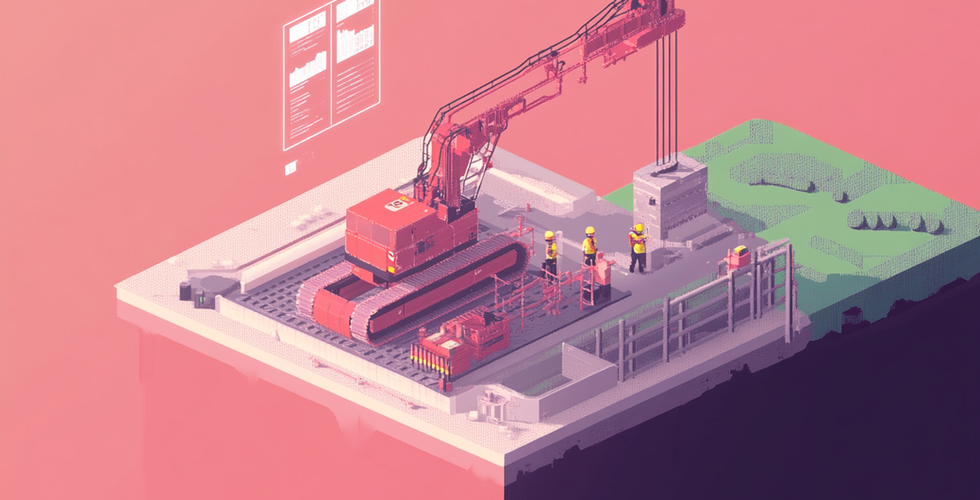
In our view, this is a pivotal moment for the construction industry. The widespread adoption of AI among trade contractors signifies a grassroots movement towards innovation. It is not a top-down mandate but a practical response to the challenges and opportunities of the modern construction landscape.
This shift is particularly noteworthy given the industry's reputation for being resistant to change. It suggests that the practical benefits of AI are undeniable and that those who fail to adapt risk being left behind.
The BuildOps Survey: A Closer Look
The BuildOps survey provides a fascinating glimpse into the state of AI adoption in the construction trades. The finding that 78% of trade contractors are using AI is a testament to the technology's growing accessibility and utility.
The survey highlights that this adoption is not limited to large corporations; smaller and medium-sized enterprises are also harnessing the power of AI to streamline their operations. This democratisation of technology is a key factor in the industry's transformation.
"The industry everyone calls 'slow to adopt tech' is actually out front leading the way," says Colin Piper, CMO of BuildOps.
Where AI is Making an Impact
The survey reveals that AI is being deployed across multiple areas of construction operations:
Project Management and Scheduling: AI tools are optimising timelines and resource allocation
Safety Monitoring: Predictive analytics are identifying potential hazards before they occur
Cost Estimation: Machine learning models are improving accuracy in budgeting and forecasting
Quality Control: Visual AI is detecting defects and inconsistencies on site
This data-driven approach is enabling contractors to make more informed decisions, reduce errors, and improve project outcomes. According to Autodesk's research, over 76% of construction leaders are increasing their investment in AI, up 9% from the previous year. This trend reflects a fundamental shift in how the industry views technology adoption.
Productivity Intelligence: The Buildots-Genda Acquisition
The recent acquisition of Genda by Buildots is a prime example of the industry's move towards what is being termed 'productivity intelligence'. By combining Buildots' visual progress data with Genda's workforce tracking capabilities, the two companies are creating a powerful new tool for optimising construction processes.
What Productivity Intelligence Means
This integration allows for:
Holistic Site Visibility: Real-time understanding of project status across all dimensions
Resource Optimisation: Better allocation of labour and equipment based on actual needs
Bottleneck Identification: Spotting inefficiencies before they impact timelines
Budget Control: Ensuring projects stay within financial parameters
We feel that the concept of productivity intelligence is a significant step forward for the construction industry. It moves beyond simple data collection and towards a more sophisticated understanding of how different elements of a project interact.
This holistic approach is essential for tackling the complex challenges of modern construction projects. The Buildots-Genda acquisition is a clear indication that the industry is embracing this new paradigm.
The Human Element: Training and Upskilling
While the adoption of AI is on the rise, the BuildOps survey also highlights a critical challenge: the need for training and upskilling. The report suggests that the main barrier to wider AI adoption is not fear of the technology, but a lack of understanding of how to use it effectively. This is a crucial point that the industry must address if it is to fully realise the potential of AI.
As the Bricks & Bytes podcast noted, "The real reason trade contractors aren't adopting AI faster... it's not fear, it's training."
Building the Right Skills
The path forward requires focused investment in:
Technical Training: Teaching teams how to use AI tools effectively
Change Management: Helping workers adapt to new workflows
Continuous Learning: Fostering a culture where upskilling is ongoing
Leadership Development: Preparing managers to lead AI-enabled teams
This underscores the importance of investing in education and training programmes that will equip the construction workforce with the skills they need to thrive in the age of AI.
This is not just about teaching people how to use specific software; it is about fostering a culture of continuous learning and adaptation. As AI technology continues to evolve, the ability to learn and adapt will be the most valuable skill of all.
The Future of Construction: A Data-Driven Industry
The trends identified in the BuildOps survey and the Buildots-Genda acquisition point towards a future where the construction industry is increasingly data-driven. According to Deloitte's 2026 Engineering and Construction Industry Outlook, embracing digital transformation is critical for firms to innovate and optimise capacity, cost, and competitiveness
The ability to collect, analyse, and act on data will be the key to success in this new landscape. This will require a new generation of construction professionals who are as comfortable with data analysis as they are with building materials.
We believe that this is an exciting time for the construction industry. The convergence of AI, data analytics, and other emerging technologies is creating a wealth of new opportunities for innovation and growth.
Those who embrace these changes will be well-positioned to lead the industry into the future.
Conclusion: The Time to Act is Now
The evidence is clear: the AI revolution is already underway in the construction industry. The question is no longer whether to adopt AI, but how to do so effectively. For project delivery professionals, this means embracing a new way of working, one that is data-driven, collaborative, and adaptable.
The time to act is now. Those who hesitate risk being left behind in an industry that is moving faster than ever before.
Subscribe to Project Flux to stay ahead of the curve on AI in project delivery.
All content reflects our personal views and is not intended as professional advice or to represent any organisation.